

Hi everyone and welcome to my third Blog, I will be talking about the impact that rule changes have had in football and how they have developed the sport. Football has had a number of rules changes since the first form of football and there are people still coming up with new rules to help further the development of football. Rules changes are introduced for many reasons, Williams (2017) states that “changes were introduced in order to improve safety, increase competition and continuity, which would address criticism from the players, spectators and the media.
One these new rules that is coming in soon is yellow and red cards for misbehaving managers. The Football Association announced the new rule will apply to coaches guilty of misconduct during matches in the FA Cup, Football League, EFL Cup, EFL Trophy and National League. Premier League managers, meanwhile, will receive verbal cautions for “irresponsible behaviour”.
There have been a number of rule changes in football that affected the development of football, listed below are some of rules that have helped develop football in the most recent years.
Goal Line Technology
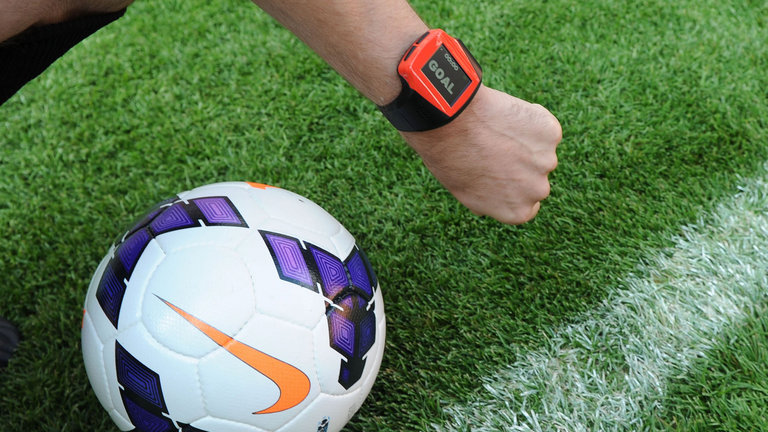
Adopted ahead of the 2013/14 Premier League season, the technology uses a series of cameras to detect whether the ball has crossed the goal-line. The system, installed by Hawk-Eye, is millimetre accurate, ensuring decisions are correct and cannot be disproved by broadcast replays. This as been on the biggest rule changes in football it’s helped to develop the sport in a sense to cut down on referee mistakes and is 100% accurate on wether the ball as crossed the line for a goal or not, one the biggest examples of ay people wanted goal line technology was in the FIFA World Cup in 2010 when Frank Lampard had a goal not given when the ball had clearly crossed the line but neither the ref or lines man saw it (this still stings to this day being an England fan). D’Orazio et al (2008) stated that Goal line tech would “prevent wrong interpretations due to perspective errors, occlusions, or high velocity of the events.”
Vanishing Spray

Introduced to prevent opposition players encroaching at free-kicks, vanishing foam is sprayed on to the pitch by the referee to provide a temporary, visible marker. Its first usage at a major international tournament came at the 2011 Copa America, before it was introduced to football fans across the globe at the 2014 World Cup in Brazil. Premier League referees began carrying aerosol cans of foam from the following season. Since there introduction vanishing spray have stopped walls from moving forward and have stopped players moving the ball forward for free-kicks, Rock et al (2013) stated that “In general these devices serve as another tool to ensure the legitimate outcome of sport competitions.”
Diving Bans

The Scottish Football Association has had the power to retrospectively punish divers since the 2011/12 season. The initiative was adopted by the English Football Association at the start of last season, terming the offence ‘successful deception of a match official’. Only incidents which result in a player winning a penalty or lead to an opponent being sent off can be punished, with the offender receiving a two-match ban. The introduction of banning players for diving as cut down on players diving which is reducing the amount of cheating in football to gain an advantage. Zhu-ying (2011) states that “cheating on the football field not only influences the competitive level of football games, but also hinders the development of football clubs, deceives the audience, harms the sports undertakings, and even leads to social unrest.” So with this rule being placed it helps the development of football and is kicking out cheating.
VAR
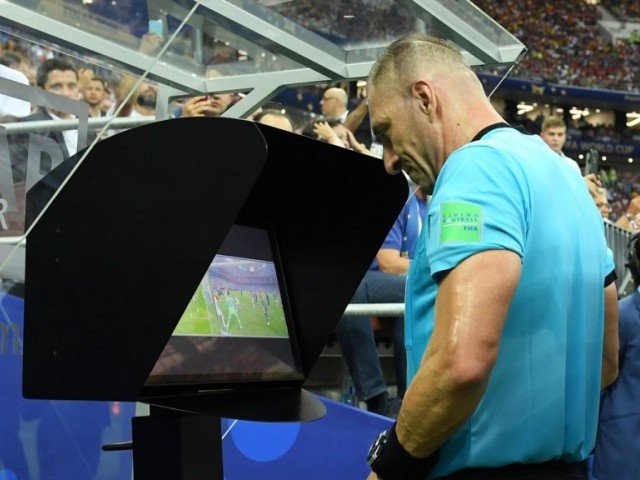
Used repeatedly during the 2018 World Cup, video assistant referees were introduced in an attempt to eradicate ‘clear and obvious’ refereeing errors relating to goals, penalty decisions, direct red card incidents, and cases of mistaken identity. Video footage is reviewed by the VAR, who advises the referee via headset. Officials can then watch the incident by the side of the pitch before making a decision, or accept the information from the VAR and take appropriate action. VAR has been trialled in the FA Cup and will be used in 2019-20 Premier League season for the first time. Although VAR has helped in refereeing decisions there have been moments where people have questioned VAR with offside decisions with the lines not being straight on the system Park and Park (2018) say “Modern soccer tries to apply VAR (Video Assistant Referee) technology to correct inaccurate calls such as an offside, but this is being put off due to the fact that real time decision-making cannot be carried out by using this technology.”
Ball Movement at Kick-off

In 2016, the way matches begin and resume following goals and half-time was changed. The previous law stated that the ball must go forward at kick-off and that players must be in their own half of the field. Players can now kick the ball in any direction, as long as it moves, with the kicker permitted to be in the opposition’s half of the pitch. This rule change hasn’t really effected much in football other than just speeding up kick-offs and allowing more players to get forward straight from a kick-off.
References
D’Orazio, T., Distante, A., Leo, M., Mosca, N., Nitti, M., Spagnolo, P. (2008) A visual system for real time detection of goal events during soccer matches.
Park, J., Park, T. (2018) Automatic Offside Judgement System based on Position Information in a Soccer Game.
Rock, R., Als, A., Gibbs, P., Hunte, C. (2013) The 5th umpire: automating crickets edge detection system. J Syst Inform Cybern 11(1):4–9
Williams, J., Hughes, M., O’Donoghue, P. (2005) The effect of rule changes on match and ball in play time in rugby union., International Journal of Performance Analysis in Sport, 5:3, 1-11
Zhu-ying, W. (2011) Emphasizing both morality and law: the routine choice of football ‘black whistle’. Guangzhou Sport University, Guangzhou.
 socialmediain.sport.blog